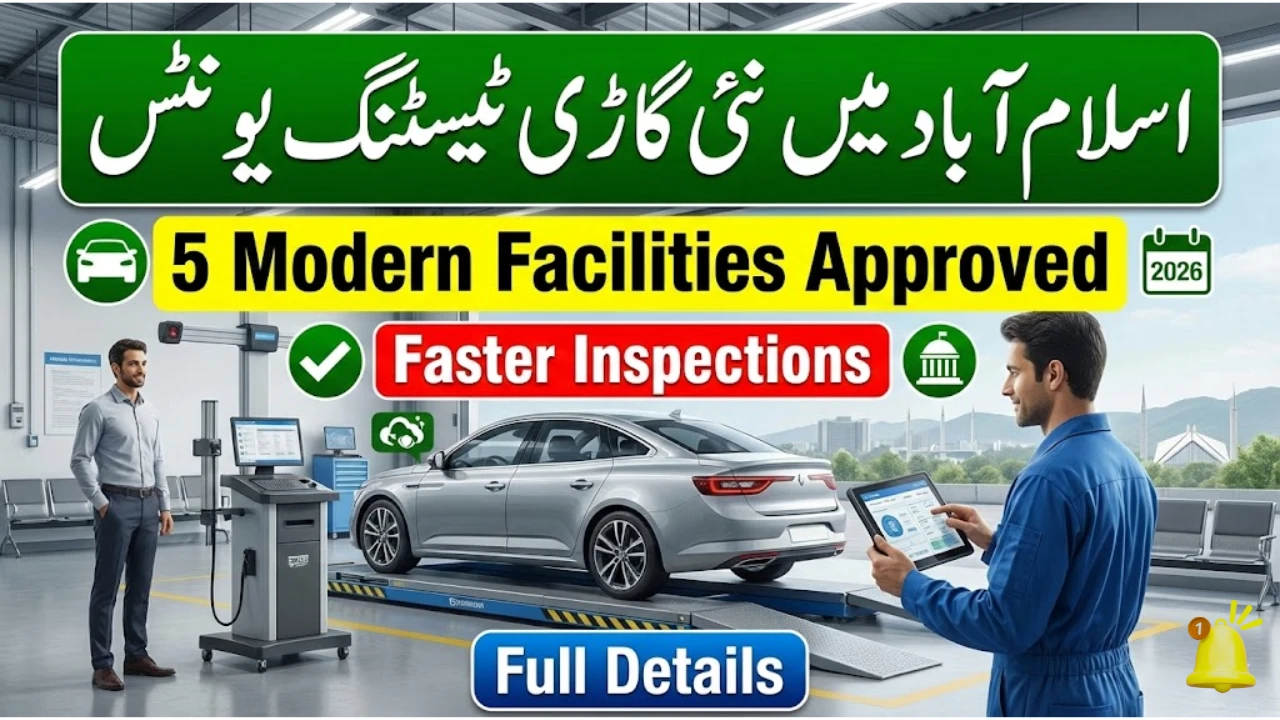
Authorities in the federal capital are moving to modernize vehicle inspections after the Capital Development Authority (CDA) cleared funding for five new testing units. The expansion is meant to tackle long queues, improve compliance, and make safety checks faster for motorists.
With Islamabad’s vehicle population rising every year, existing centers have been struggling to keep up with demand. Officials believe the upgrade will significantly improve service delivery.
Why CDA Is Expanding Testing Capacity
Rapid urban growth, new housing sectors, and increasing daily commuters have added pressure on transport infrastructure. More vehicles mean more inspections, renewals, and environmental checks.
By adding new units, CDA expects to:
-
Cut waiting times
-
Increase daily inspection volume
-
Improve accuracy in testing

-
Provide smoother service for owners
What Will Change for Vehicle Owners?
For citizens, the most visible improvement will be speed. Modern equipment is designed to complete technical evaluations quickly while minimizing manual procedures.
Drivers can expect:
-
Faster turnarounds
-
Better queue management
-
Clearer compliance results

-
Reduced repeat visits
Technology Upgrade in Focus
According to internal planning documents, the new units will rely on updated diagnostic tools. These systems help examiners evaluate brakes, suspension, emissions, and other roadworthiness factors with greater precision.
Automation also reduces human error and improves record keeping.
Environmental Benefits
CDA says the initiative is not only about convenience. Stronger emission monitoring supports Islamabad’s broader environmental goals.
Better screening of smoke-emitting or poorly maintained vehicles can contribute to:
-
Cleaner air

-
Lower pollution exposure
-
Improved urban health outcomes
Part of a Larger Transport Reform
The authority has been gradually investing in digitalization, infrastructure improvement, and regulatory enforcement. Vehicle fitness certification is a key piece of that strategy.
Officials argue that safer cars on roads translate directly into fewer accidents and better traffic discipline.
When Will the Units Become Operational?
Procurement and installation phases are expected to begin soon. Once equipment arrives, testing teams will receive training before full public rollout.
Exact launch dates will be announced after readiness checks.

FAQs
How many new units are approved?
Five.
What is the main purpose?
To reduce delays and improve inspection accuracy.
Will this affect emission control?
Yes, stronger checks are expected.
Who benefits most?
Daily commuters, commercial operators, and private vehicle owners.
When will services start?
After procurement and staff training are completed.


This content is published for general information and awareness purposes. kixxoil.pk is an independent informational website and is not officially connected with any government authority or public institution. Readers are encouraged to confirm details directly from official sources before making any decisions.